Shape, duty, and the document that closes the gap
Headline pitch is a screening value. The test basis for brightness, the control interface, and the mounting method decide whether two flexible replies can be compared. Standard flat cabinets are simpler to document. An application-specific curve is justified when the architecture already fixes the radius. Neither choice is a quality rank.
| Shape |
What to measure |
Power and control |
Conflict to flag |
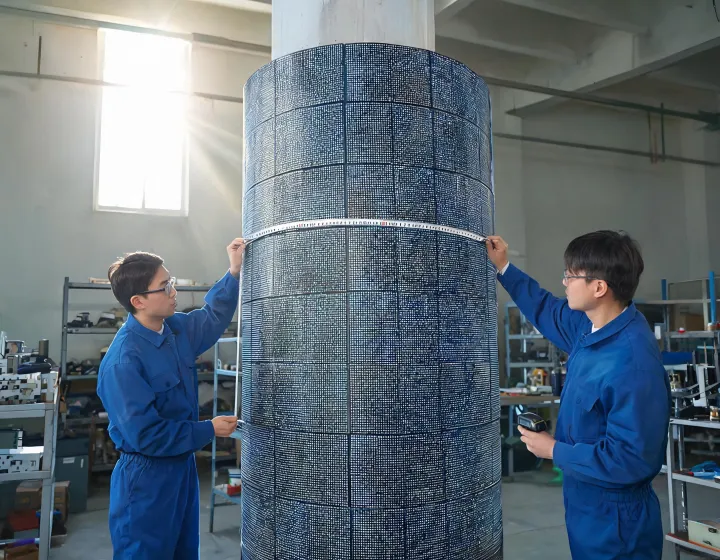
| Column wrap |
Diameter, height, and minimum bend radius in mm |
Sending card location and cable path inside the column |
Module width that will not tile around the circumference |
| Concave cove |
Radius, arc length, and viewer distance in m |
Refresh rate if cameras shoot the cove |
Front service blocked by the set piece |
| Wave or ribbon |
Peak-to-peak depth and module cut pattern |
Separate power zones so a dim section can be traced |
Magnetic mount versus screw mount on the substrate |
| Rental curve |
How many times the face is struck and reset |
Flight-case cube and connector cycle life as a question |
A fixed-install module quoted into a touring duty |
Repeatability of the seam after the module is removed and replaced is a maintenance question. Ask for the fastening method and the spare parts list. Noise level is secondary on a loud stage and primary in a gallery. Ambient temperature inside a sealed column can exceed the room. Put the expected range in degrees C on the brief.
A procurement situation: a museum wants a 4 m ribbon at roughly 2.5 mm pitch, viewed from 2 m, with front access because the wall behind is historic plaster. The process is to request the bend radius, the module cut size, the watts per square meter, and a drawing. The result of that request is a set of factory answers, not an approval from this desk. If one factory offers a 2.6 mm module and another offers 2.9 mm, both are specification deviations until engineering accepts one.
Lowest equipment price favors the reply with the fewest accessories when the curve hardware is truly identical. Comparable delivered scope shows frames, power, packing, and commissioning that a ribbon often needs. Use the second view before you rank totals. This page does not assign a percentage saving.